
There is something profoundly comforting about calling a place home. During life’s most difficult moments, people often find themselves saying, “I just want to go home.” Those simple words reveal something deeply human. Home represents far more than four walls and a roof. It is a place of safety, belonging, privacy, and normalcy. It is where we recover, where we gather with those we love, and where we find peace after life’s most difficult days.
Unfortunately, that foundation has become increasingly difficult for many families to attain. According to the Joint Center for Housing Studies at Harvard University, “The rise in home prices plays a central role in the growth of price-to-income ratios as incomes simply do not increase at the same rate. Nationally, home prices grew by 43 percent between 2019 and 2022, while incomes grew by just 7 percent in that same period” (Hermann & Whitney, 2024). As housing costs continue to outpace wages, families who once lived comfortably are finding themselves with little financial margin when unexpected hardships arise.
The challenge extends well beyond those who are already homeless. Millions of Americans are experiencing housing instability long before they ever lose the place they call home. According to the Joint Center for Housing Studies at Harvard University, 17.6 million households are now considered severely cost burdened, meaning they spend more than half of their income simply trying to keep a roof over their heads (Hermann & Whitney, 2024). For many families, housing has become their largest monthly expense, leaving little room to recover from life’s inevitable setbacks. Housing instability creates a fragile financial and living situation where there is little, if any, margin for life’s ordinary challenges. When more than half of a family’s income is consumed simply keeping a roof overhead, there is often nothing left to absorb an unexpected expense. A flat tire, a car repair, reduced work hours, an illness, or another routine setback—events many families could once weather—can suddenly place housing itself at risk. In these circumstances, even ordinary hardships can trigger a cascade of events that ultimately leads to homelessness.
The U.S. Department of Health and Human Services describes homelessness as “housing deprivation in its most severe form” (Office of Disease Prevention and Health Promotion, n.d.). Housing instability exists along a continuum, and homelessness represents the point where that instability has reached its most devastating consequence.
Homelessness is rarely just the loss of a place to sleep.
It often means children changing schools, parents struggling to maintain employment, declining physical and mental health, financial collapse, and the loss of the stability every family needs to move forward with confidence. Research consistently shows that stable, affordable housing is closely linked to improved health and overall well-being, reinforcing the idea that housing is far more than a physical structure—it is a foundation for opportunity (Center for Housing Policy, 2015). At Provident Hearts Foundation, we believe every person deserves the opportunity to build that foundation.
We also believe our communities possess far more untapped potential than many people realize. Across North America, organizations have demonstrated that neglected properties once considered liabilities can become places of hope once again. The Peterborough Community Housing Development Corporation rescued a derelict home that had been slated for demolition and transformed it into affordable housing, even receiving demolition funds from the city to support the renovation effort (Hicks, 2000).
Similar success has been demonstrated by Well House in Grand Rapids, Michigan. Through the thoughtful rehabilitation of neglected properties and a commitment to long-term housing stability, the organization has helped more than one hundred individuals move from homelessness into permanent housing, with 91 percent not returning to homelessness (Nichols, 2016).
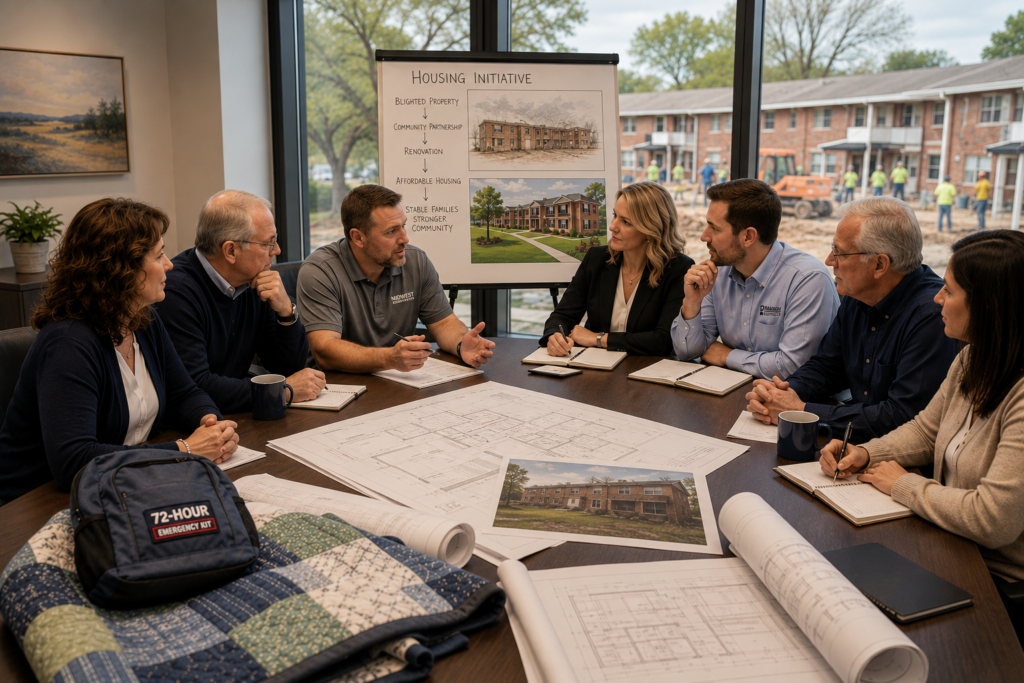
Inspired by examples like these, Provident Hearts Foundation is working toward developing a sustainable housing initiative that will help transform neglected properties into places of hope. Our vision is to build a model that leverages community partnerships, volunteer service, donated materials, and professional expertise to reduce the cost of creating safe, affordable housing while maximizing the impact of every donated dollar. More importantly, our vision extends beyond simply providing a home. We hope to walk alongside individuals and families as they rebuild their lives, offering encouragement, practical support, and opportunities to move toward greater stability, self- reliance, and lasting independence. While this initiative is still in development, it remains one of our foundation’s highest priorities because we believe sustainable solutions create lasting change. This is the vision that inspires Provident Hearts Foundation.
We believe housing should do more than provide shelter. It should provide stability. It should restore dignity. It should create opportunities for children to thrive, parents to succeed, and families to build brighter futures.
Just as importantly, we believe lasting housing stability is built through partnership. No single organization will solve homelessness alone. Provident Hearts Foundation is committed to joining the many organizations already serving our community, bringing a clear and focused vision centered on lasting housing solutions. Emergency assistance has an important place in times of crisis, but our primary focus is helping individuals and families move beyond temporary relief toward the stability of a place they can truly call home.
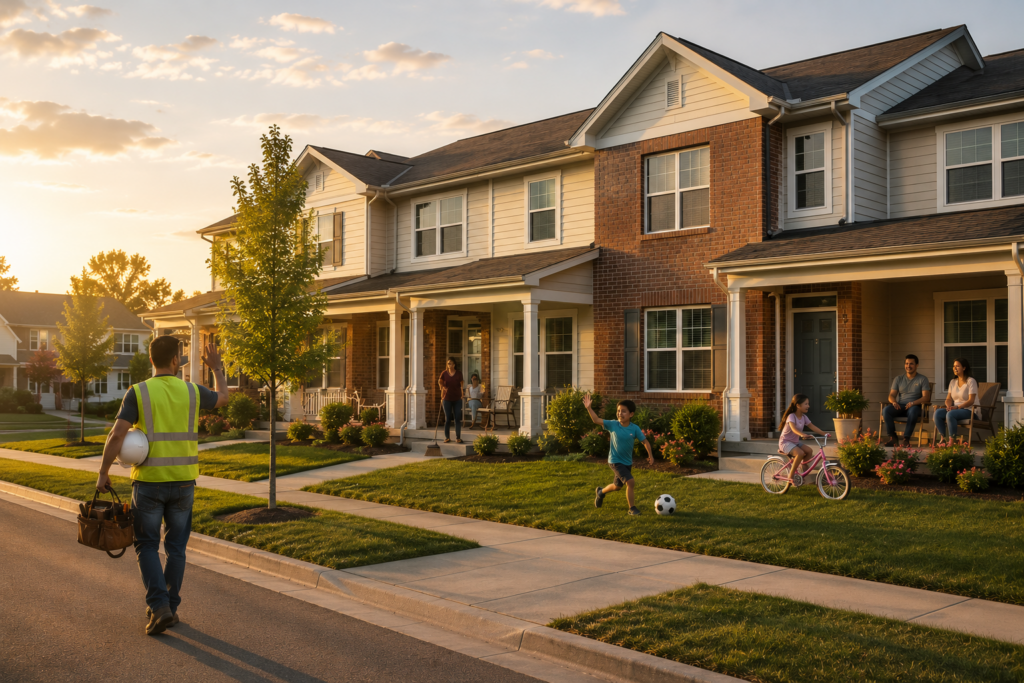
When communities unite around a shared vision, extraordinary things become possible. Our vision extends far beyond restoring neglected properties. We hope to restore lives, strengthen neighborhoods, and create opportunities where they did not previously exist. Every home that is restored represents far more than a successful renovation project. It represents a family finding stability, children discovering security, neighbors investing in one another, and a community choosing hope over despair. We believe that compassionate, sustainable housing solutions can reduce homelessness while helping build stronger, healthier, and more resilient communities for generations to come. That is the future we believe is possible. It is a future where more families can once again experience the comfort and security of simply being able to say, “I’m going home.” It is a future worth investing in, worth working toward, and worth building together. We invite you to join us as we take the first steps toward making that vision a reality.
References
Center for Housing Policy. (2015). The impacts of affordable housing on health: A research summary. National Housing Conference. https://nhc.org/wp-content/uploads/2017/03/The-Impacts-of-Affordable-Housing-on-Health-A-Research-Summary.pdf
Hermann, A., & Whitney, J. (2024). The state of the nation’s housing 2024. Joint Center for Housing Studies of Harvard University. https://www.jchs.harvard.edu/state-nations-housing-2024
Hicks, K. (2000). New life for old houses: Peterborough group turns vacant homes into low-cost housing. Toronto Star.
Nichols, M. (2016). Well House hits milestone of helping 100 homeless. Grand Rapids Business Journal, 34(15), 8.
Office of Disease Prevention and Health Promotion. (n.d.). Housing instability. Healthy People 2030. https://odphp.health.gov/healthypeople/priority-areas/social-determinants-health/literature-summaries/housing-instability